Understanding Milk Jugs Top Load Testing
Top load testing is an essential method for evaluating the mechanical strength and durability of milk jugs and other thermoplastic containers. The test simulates vertical stacking or storage conditions, measuring the ability of a container to withstand compressive forces without permanent deformation or failure. By performing top load testing, manufacturers can ensure product safety, optimize material usage, and maintain consistent quality across batches.
This test is not limited to milk jugs; it is also widely applied to juice bottles, detergent containers, pharmaceutical bottles, and other rigid thermoplastic containers. The data generated allows engineers to improve container design, enhance performance, and reduce material waste.
ASTM D2659 Standards for Column Crush Testing
The ASTM D2659 standard defines procedures for column crush testing, which is the basis of top load testing. The standard specifies how to measure:
- Crushing Yield Load – the force at which permanent deformation begins.
- Deflection at Yield Load – the amount of vertical displacement at the yield point.
- Crushing Load at Failure – the maximum force before structural collapse.
- Apparent Crushing Stiffness – the slope of the load-deflection curve in the elastic region.
Following ASTM D2659 ensures repeatable, reliable results that are recognized globally. Column crush tests provide comparative data, support design decisions, and guide quality assurance processes, though additional testing like impact, creep, or fatigue may be required for long-term performance evaluations.
Top Load Tester: Essential Equipment for Milk Jug Testing
A top load tester is a precision instrument designed to apply a controlled vertical load to containers, measuring the force and displacement during testing. The Cell Instruments TLT-01 Top Load Tester is widely used for milk jug testing, offering:
- Adjustable test speed for different container sizes.
- High-precision load cells to capture maximum load and failure points.
- Automated data acquisition and reporting for R&D and quality control.
- Compatibility with various container shapes and materials, including PET, HDPE, and PP.
By using the TLT-01, laboratories and production facilities can monitor container performance, optimize designs, and improve overall packaging efficiency.
Compression Test Procedure for Milk Jugs
The compression test involves placing the milk jug between two platens and applying a steadily increasing vertical load until deformation or failure occurs. Key metrics recorded include:
- Crushing Yield Load – indicates the start of permanent deformation.
- Deflection at Crushing Yield – shows how much the container flexes under load.
- Crushing Load at Failure – the ultimate strength before collapse.
- Apparent Crushing Stiffness – reflects material rigidity and resistance to compression.
Proper alignment and consistent loading speed are critical for reliable results. The TLT-01 ensures accurate measurements and repeatable testing, reducing operator variability and errors.
Applications and Importance of Top Load Testing
Top load testing provides actionable insights for:
- Research & Development: Optimize container geometry and material selection.
- Quality Assurance: Monitor batch consistency and production quality.
- Design Verification: Confirm containers can withstand transportation, stacking, and storage.
- Regulatory Compliance: Meet national and international safety and packaging standards.
In addition, top load testing supports sustainability initiatives by identifying opportunities to reduce material usage without compromising container strength.
Understanding Material Behavior in Milk Jug Testing
Different materials respond differently under compression. For example:
- HDPE milk jugs often display ductile behavior, absorbing more energy before failure.
- PET jugs may fail more brittlely, showing higher initial stiffness but lower deformation capacity.
- PP containers exhibit moderate stiffness with high resilience.
Top load testing allows manufacturers to compare materials, identify weaknesses, and select the optimal material for durability, cost-efficiency, and environmental impact.
Why Choose Cell Instruments for Milk Jug Top Load Testing
Cell Instruments offers advanced top load testers for milk jugs and other thermoplastic containers. With TLT-01, users can:
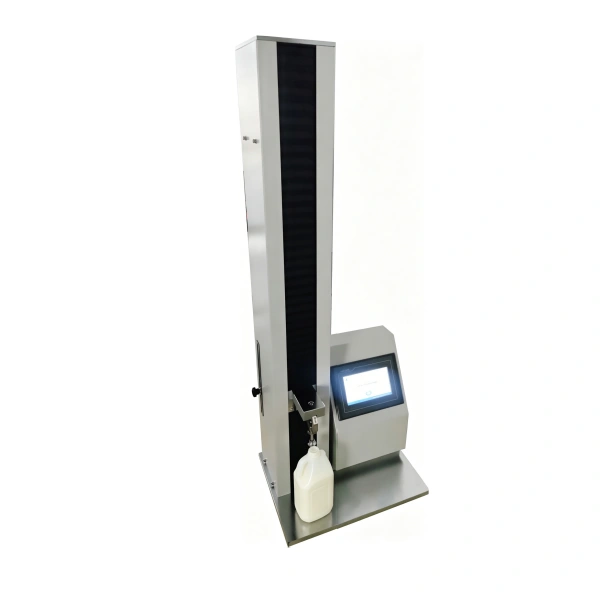
- Conduct reliable compression tests in compliance with ASTM D2659.
- Customize test parameters for various container sizes, shapes, and materials.
- Capture detailed load-deflection curves for in-depth analysis.
- Ensure repeatable and precise results to maintain consistent product quality.
Investing in the TLT-01 improves laboratory efficiency, strengthens R&D capabilities, and helps maintain a competitive advantage in the packaging market.
Enhancing Container Durability through Testing
Routine top load testing empowers manufacturers to optimize container design and improve stacking performance. By analyzing the data, engineers can strengthen weak areas, reduce material waste, and extend container lifespan. This proactive approach helps prevent product failure during transportation or storage, ensuring consumer satisfaction and brand protection.
 SV
SV  EN
EN  AR
AR  BG
BG  CS
CS  DA
DA  DE
DE  EL
EL  ES
ES  ET
ET  FI
FI  FR
FR  HU
HU  ID
ID  IT
IT  JA
JA  KO
KO  LT
LT  LV
LV  NB
NB  NL
NL  PL
PL  PT
PT  RO
RO  RU
RU  SK
SK  SL
SL  TR
TR  UK
UK